
When couples first start planning their elopement, one of the biggest questions they ask is:
When is the best time to elope in Scotland?
And the honest answer is – it depends entirely on what kind of experience you want.
Scotland transforms dramatically throughout the year. The light shifts. The colours change. The atmosphere deepens or softens. A misty winter morning in Glencoe feels completely different from a golden October afternoon in the Highlands – and both can be equally magical in their own way.
Over the years, I’ve photographed countless Scottish elopements in every season. I’ve seen snow settle quietly on mountain peaks in January, wildflowers bloom in early spring, endless summer sunsets stretching past 10pm, and autumn hills glowing in warm amber tones. Each season brings something unique – and each has its practical considerations too.
This guide isn’t about declaring one season as “the best.”
It’s about helping you choose the right time to elope in Scotland based on:
Whether you’re dreaming of dramatic winter skies, fresh spring landscapes, long summer evenings, or rich autumn colours – there is a perfect season for you.
Below, I’ll walk you through winter, spring, summer and autumn in Scotland, with honest pros and cons for each – so you can make a decision that feels aligned, not just popular.
If you’re drawn to quiet landscapes, dramatic skies and that unmistakable “Scottish mood”, winter might be the most underrated season to elope in Scotland.
January, February and early March are often the quietest months of the year, which can completely transform your experience.


Winter is by far the calmest season — especially after the Christmas period.
If privacy is high on your priority list, winter gives you space to truly be present with each other.
When conditions align, winter offers:
This is the season with the highest chance of quintessentially Scottish moodiness — atmospheric, cinematic, romantic.
Winter often means:
If you’re dreaming of an Edinburgh city elopement, winter gives you options that are often unavailable in autumn.
One of winter’s biggest hidden advantages:
This is particularly helpful if you’re planning a multi-day elopement experience and you’re looking for a truly beautiful, stylish accommodation to get ready at – and then unwind post-elopement. The best options often get booked up even a year in advance in the spring and summer.


Yes, days are shorter – but that’s not necessarily a drawback.
Short daylight hours allow us to:
Imagine ending your elopement day in a historic pub, sitting by a fireplace with a glass of whisky — that’s peak winter magic.
Winter elopements feel intentional.
Layered outfits, textured fabrics, candles, fireplaces – the whole day feels immersive rather than rushed.
And yes — I always bring hand warmers, and I guide you through layering properly so you’re comfortable during outdoor photos. Cold hands are not part of the plan.


Every season has trade-offs — here’s what to be aware of:
Northern Highlands (especially areas like the Isle of Skye) can experience:
If you’re set on winter but want more stability, consider:
These areas are often more manageable in winter conditions.
Many smaller businesses in places like the Isle of Skye close for a winter break.
If eloping there in winter:
Temperatures can drop — especially in the Highlands.
But with:
You’ll stay comfortable while still looking incredible.


Winter will be the right season for you if:
Spring in Scotland feels like a quiet unfolding.
After the stillness of winter, the landscape begins to soften. The hills gradually shift from deep browns to muted greens. The air carries a freshness to it — still crisp in March, lighter by April, and noticeably warmer by May. It’s a season that doesn’t arrive all at once, but slowly, almost shyly.
There’s something beautifully understated about eloping in spring. It feels calm. Unrushed. Full of gentle contrast.
One of the loveliest things about spring in Scotland is how quickly the light returns.
In March, sunset usually falls between 6pm and 7:30pm, depending on the time of month and the clocks changing.
In April, sunset moves to around 8–8:45pm.
By May, sunset stretches between 9pm and 10pm — and even later in parts of the Highlands.
The days begin to feel expansive. There’s space to move slowly, to travel between locations without rushing, and to let your day unfold naturally.
Towards the end of April, Edinburgh begins to bloom.
Cherry blossom trees appear in parks and along historic streets, softening the city with pale pink tones. Around the same time — usually from late April until the second week of May — wisteria begins to flower along Circus Lane, one of Edinburgh’s most picturesque streets. The cascading purple blooms climbing the stone façades create a beautifully romantic backdrop for portraits.
If you’re drawn to a city elopement that feels gentle and seasonal rather than dramatic, this short window in late spring can be incredibly special.


The second half of May marks a noticeable shift in the Highlands.
The winter browns and pale yellows gradually give way to fresh greens. It’s a gentle transformation – subtle, but beautiful – and the landscapes begin to feel softer and more alive without losing their rugged character.
Throughout April and into May, wildflowers begin appearing along woodland paths, loch edges and open glens. Nothing overwhelming – just delicate details that add texture and quiet colour to your surroundings.
Spring – particularly April and May – is often among the drier months in Scotland compared to autumn and winter.
March can still feel mixed and occasionally wintery, but rainfall typically eases as the season progresses, especially in eastern regions like Edinburgh. Of course, Scotland is never entirely predictable – but statistically, spring often offers slightly more stability than people expect.
As Scotland moves closer to summer, accommodation prices begin to rise – particularly from mid-April onwards.
Easter and the UK bank holidays in early and late May often bring higher demand, busier roads and increased hotel rates. If you’re hoping for a calmer and more peaceful experience, choosing a weekday and avoiding bank holiday weekends can make a noticeable difference – both financially and atmospherically.
Longer daylight hours are beautiful – but they do change the rhythm of your day.
Average sunset times in the spring months are as follows:
If you’d like the quietest experience at popular locations, scheduling your ceremony or portraits closer to sunset often works best. However, in May especially, this can mean finishing quite late – which might limit the chance for a relaxed, romantic dinner afterwards.
For some couples, that late golden light feels magical. For others, it’s simply something to plan around. So if you’re thinking about sunset finish in May, why not schedule your romantic dinner the day after the elopement?
Spring marks the beginning of Scotland’s busier travel season.
From mid-April onwards, visitor numbers gradually increase – particularly in well-known locations like Glencoe, Isle of Skye and Edinburgh. While it’s still generally calmer than peak summer, you’re less likely to have completely empty landscapes compared to winter.
Thoughtful timing – early mornings, weekdays or sunset planning – can help you retain that sense of intimacy.
Midges usually begin appearing in May, particularly in still, damp conditions.
That said, they are often less intrusive than their reputation suggests. Scotland experiences many naturally breezy days – especially in open Highland landscapes – and wind keeps midges at bay. With a little planning, they’re rarely the defining feature people worry they’ll be.
Spring feels right if you’re drawn to something softer and quietly romantic.
If you love the idea of fresh green hills instead of autumn gold.
If long daylight feels expansive rather than overwhelming.
If you’re dreaming of cherry blossom in Edinburgh or the first wildflowers appearing along a lochside path.
It’s a season of balance – not as stark as winter, not as busy as summer, not as saturated as autumn.
Summer in Scotland feels expansive.
The landscapes are at their greenest. The days stretch long into the evening. There’s an energy in the air – especially in cities like Edinburgh – while the Highlands feel lush, open and alive.
It’s a season of contrast. Bright, vivid greens against often dramatic skies. Long golden June evenings followed by soft twilight that seems to linger forever.
And while summer is often assumed to be the busiest time to travel to Scotland, elopements themselves are often more spread out than in autumn – which can create surprisingly intimate experiences when planned thoughtfully.


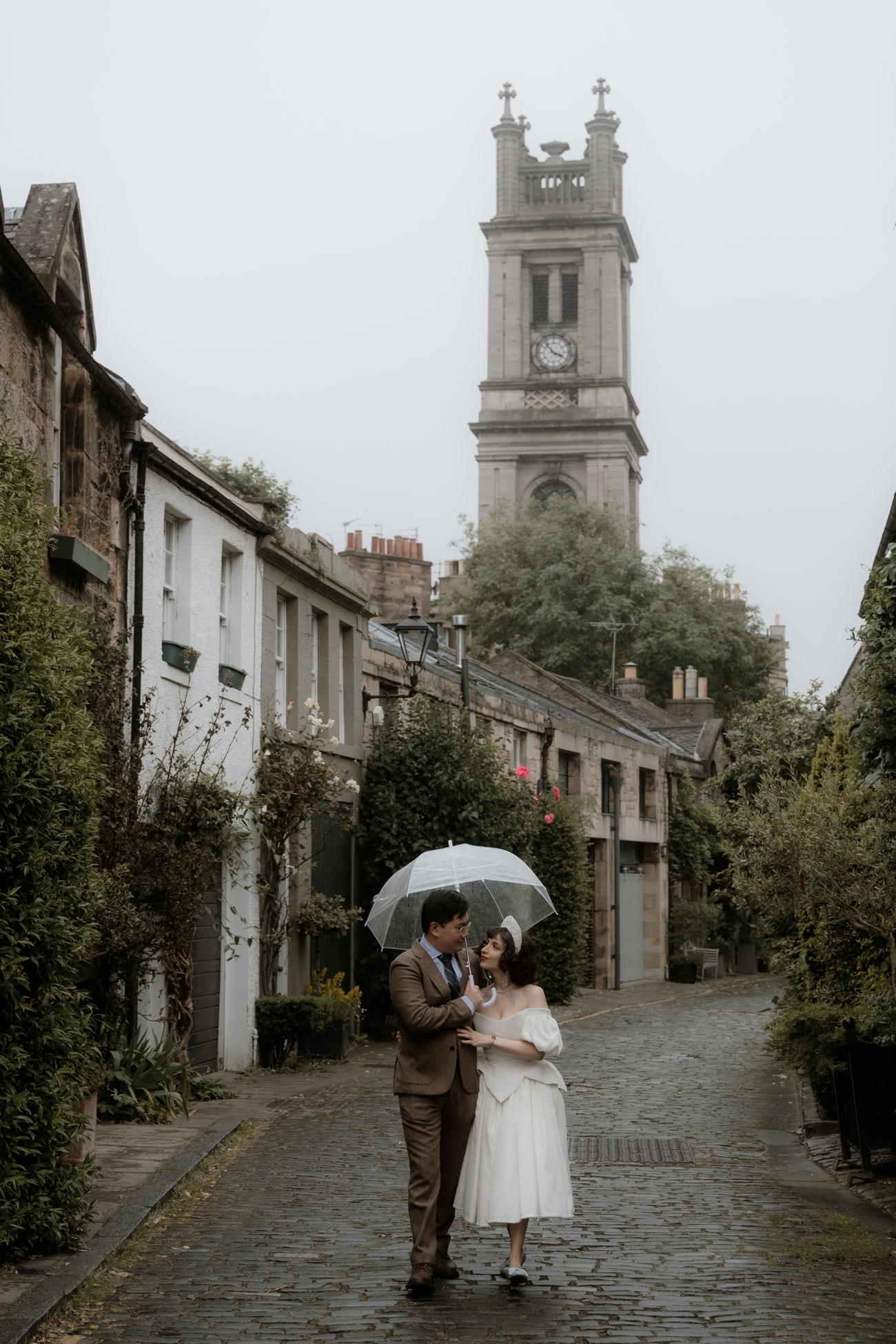
By June, both Edinburgh and the Highlands are spectacularly green.
The hills are full and vibrant rather than muted. Woodland paths feel dense and alive. Lochside locations look softer and more layered. If you’re drawn to rich greens rather than autumn gold or winter browns, summer offers that vibrancy.
Summer light in Scotland is unlike anywhere else.
Average timings:
In June especially, twilight lingers long after sunset – particularly in the Highlands. It gives you flexibility. Space. Time to explore more than one location without rushing.
Average daytime temperatures typically range between:
It’s rarely extreme. You won’t often face intense heat, but you’ll feel the comfort of milder conditions – especially compared to spring’s crisp air or winter’s chill.


Summer brings a unique energy to Scotland.
In August, Edinburgh hosts the world-renowned Fringe Festival – filling the city with theatre, comedy, music and art. There are also outdoor concerts, including seasonal events like Edinburgh Castle Harry Potter live orchestra performances, adding to the atmosphere.
For couples who love the idea of pairing their elopement with culture, music or celebration, summer will be perfect.
While summer brings brightness and green landscapes, Scotland still delivers atmosphere.
You can still experience rolling cloud, dramatic skies and shifting light – especially in the Highlands. It’s not endless sunshine – but as you know weather in Scotland is unpredictable so brace yourselves for anything and everything. Definitely a higher chance of moody days than spring!
Interestingly, while tourism peaks in summer, elopements themselves are often more concentrated in autumn. That can mean greater flexibility in certain weeks and a surprisingly intimate experience – particularly in June and July.


August in Edinburgh is lively – and crowded.
The Fringe Festival and other events bring a significant increase in visitors. Accommodation becomes scarce and prices rise noticeably. If you’re planning an August elopement in the city, it’s essential to secure your hotel as soon as you’ve settled on a date.
For a more balanced experience in Edinburgh, June and July are often ideal – still green and vibrant, but without peak festival intensity (and prices!).
While June and July work beautifully in Edinburgh, the very end of August can feel wonderful in the Highlands as well.
Visitor numbers begin to ease slightly at the very end of August, the landscapes remain lush and sunset times become a little earlier – which can create a gentler rhythm to your day. No missing your 9pm dinner reservation!
Summer is peak midge season, particularly in still, damp Highland locations. Please remember that thankfully we don’t experience midges in Edinburgh, ever and at all! So it should only be a concern if you’re eloping in the Scottish highlands.
However, wind is your greatest ally. On breezy days – which are common in Scotland – midges are far less noticeable. Thoughtful location choice and timing (avoiding still evenings near water) make a significant difference.

Summer suits couples who:
It’s open, vibrant and full of life – but with thoughtful timing, it can still feel deeply personal.
Autumn in Scotland is INCREDIBLY atmospheric.
The colours, frequent overcast skies, fog – rolling mist often wrapping around Edinburgh’s skyline. Low clouds hugging the Highland mountains. There is truly nothing more magical than watching the landscape slowly reveal itself through the haze.
Disclaimer: sunny days still appear quite frequently across September and October!
Autumn in Scotland brings vibrant reds, golden yellows, deep ambers and rich browns. The bracken turns copper. The hills glow. The trees set the scenery on fire.
It’s cinematic. It’s emotional. It’s unforgettable – even on sunny days.
But please remember — autumn is currently the most popular season to elope in Scotland! September and October in particular are the busiest elopement months of the entire year. And most Scotland elopement photographers’ diaries fill up quickly and far in advance.


Autumn brings more overcast and cloudy days – which is actually perfect for photography.
Cloud cover creates soft, even light without harsh shadows. Skin tones look natural, colours feel rich and balanced, and the entire scene has a subtle, romantic quality.
And then there’s the mist.
Edinburgh wrapped in early morning fog. Low clouds drifting through Glencoe. The Quiraing slowly revealing its ridges as the wind moves across the hills. There is nothing more magical than photographing an elopement surrounded by misty Scottish landscapes.
But which month gives you the highest chance of misty, moody days? Definitely November.
This is when Scotland truly transforms.
Bracken turns copper and bronze. Ferns deepen into dark browns. Hills glow with golden tones. Even in places without many trees, the landscape feels textured and full of depth.
In Edinburgh, some locations stay green for quite a while – Holyrood Park, Arthur’s Seat, Dean Village and Calton Hill don’t always show dramatic seasonal change. But if you’re looking for autumn colours in Edinburgh, you’ll find them at: The Vennel Steps with Edinburgh Castle views, The Writer’s Museum courtyard, Circus Lane and along Royal Mile.
In the Highlands, colour varies depending on location. The Cairngorms National Park often remains beautifully green, especially around Loch an Eilein and Loch Garten, surrounded by pine forests. But dry ferns create stunning autumn backdrops. Lochan Uaine (the Green Loch) is particularly beautiful at this time of year. Glencoe is one of the best places for an autumn elopement. Even without many trees, the moorland shifts into yellow and orange tones and the bracken turns dark brown, creating dramatic contrast against the mountains. If you’d love autumn foliage, Glencoe Lochan is surrounded by yellow larches and often mist over the water – truly stunning.
Glen Etive, especially near the forest area, feels enchanted on a foggy day. And Loch Lomond & The Trossachs National Park is breathtaking in late October and November when woodland colours peak.
On the Isle of Skye, landscapes such as the Fairy Glen, the Quiraing and the Old Man of Storr shift into deeper browns and earthy tones towards the end of October and beginning of November. Whereas early September is a season of drying ferns which will give your photos a magical fall feel.
Even without obvious foliage, autumn in Scotland is absolutely gorgeous.

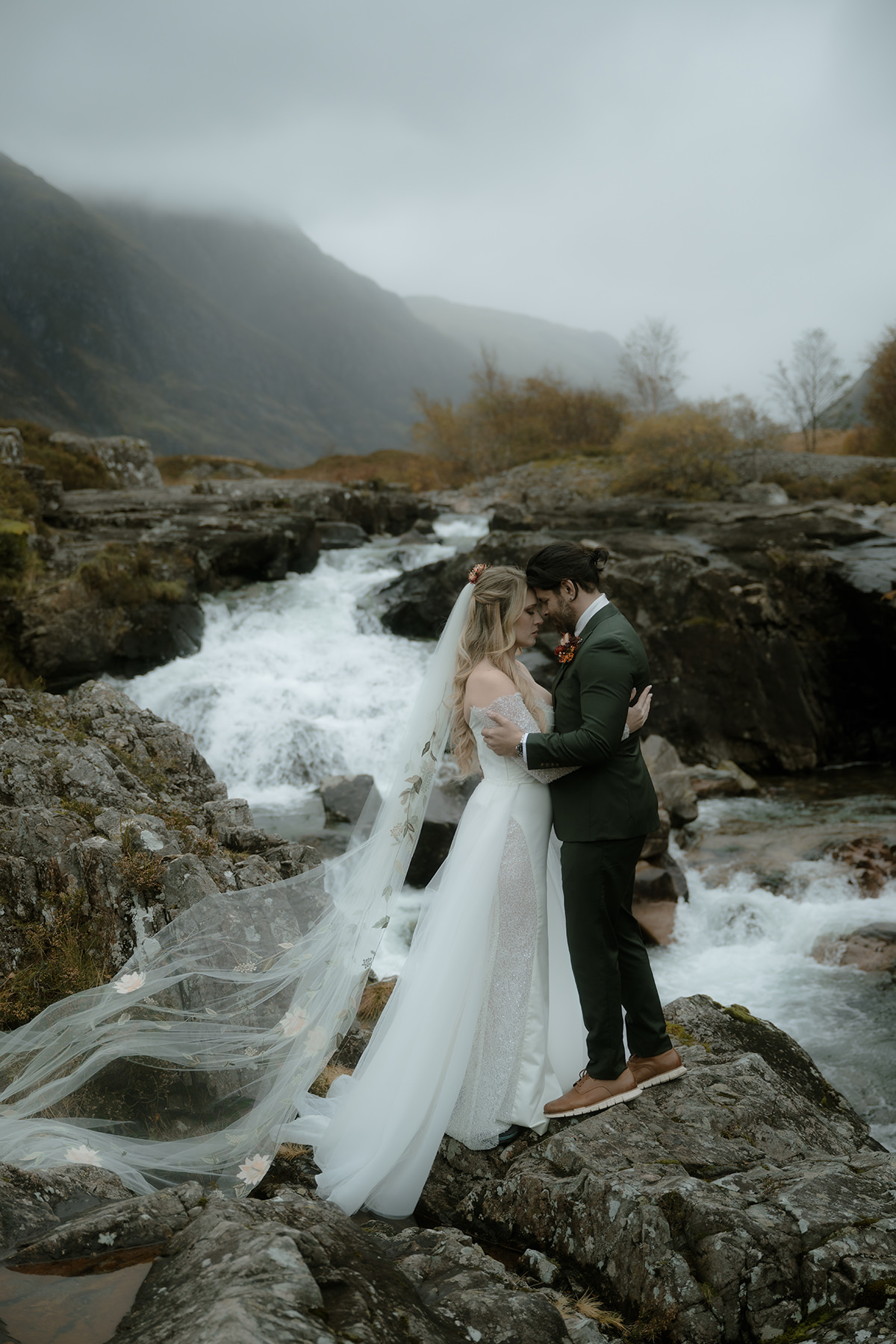

Autumn in Scotland feels fresh and noticeably cooler as the weeks pass.
Average daytime temperatures gradually shift:
Early September can still feel surprisingly mild, especially on a sunny day. By November, however, the air becomes crisper.
Important information on storms: Autumn also brings a higher chance of wind, rain and occasional Atlantic storm systems, especially from mid-October onwards. Storms rarely last for days at a time, but they can bring strong gusts and heavy showers. As always, flexibility is key. Sometimes that simply means waiting out a passing shower or adjusting locations slightly. On rarer occasions during named storms, last-minute timeline changes may be needed for safety and comfort. As Scotland Elopement Photographer I monitor the weather forecasts daily and will always be in touch with you as soon as I have some real concerns about the weather on your elopement day.
And finally, in recent years, Scotland – particularly the central Highlands – has seen an increase in early-season snowfall. That means a late autumn elopement can occasionally surprise you with snow-dusted peaks – even before winter officially begins.


Summer days in Scotland are incredibly long – in June you can experience up to 18 hours of daylight, which means golden hour can happen around 10:30pm.
In autumn, the best evening light arrives much earlier, often before 6pm. That makes your timeline far easier and less exhausting after a full day of getting ready and exploring.
Sunrise ceremonies are also more realistic – you won’t need to wake up in the middle of the night to be ready for first light.
Of course, autumn days can be cloudy and rainy, which means golden hour isn’t guaranteed. But when the light breaks through, it’s unforgettable.


Autumn feels intimate and comforting.
Cosy blankets, crackling fireplaces, hot toddies, mulled wine, haggis, neeps & tatties – it’s the perfect season to lean into warmth after your ceremony.
You could plan photographs by the fire in your cottage, share a glass of wine wrapped in a tartan blanket, or soak in a hot tub after a misty highland adventure.
If you’re eloping in Edinburgh, finishing the day in a cosy pub with a warming drink is always a wonderful idea – and it adds beautiful storytelling moments to your gallery.
An oversized shawl or tartan blanket will not only complement your autumn look, but keep you comfortable throughout the day.
Midge season in the Scottish highlands usually runs from early May through early September.
By the end of September, they’re generally long gone – making autumn far more comfortable than peak summer months.

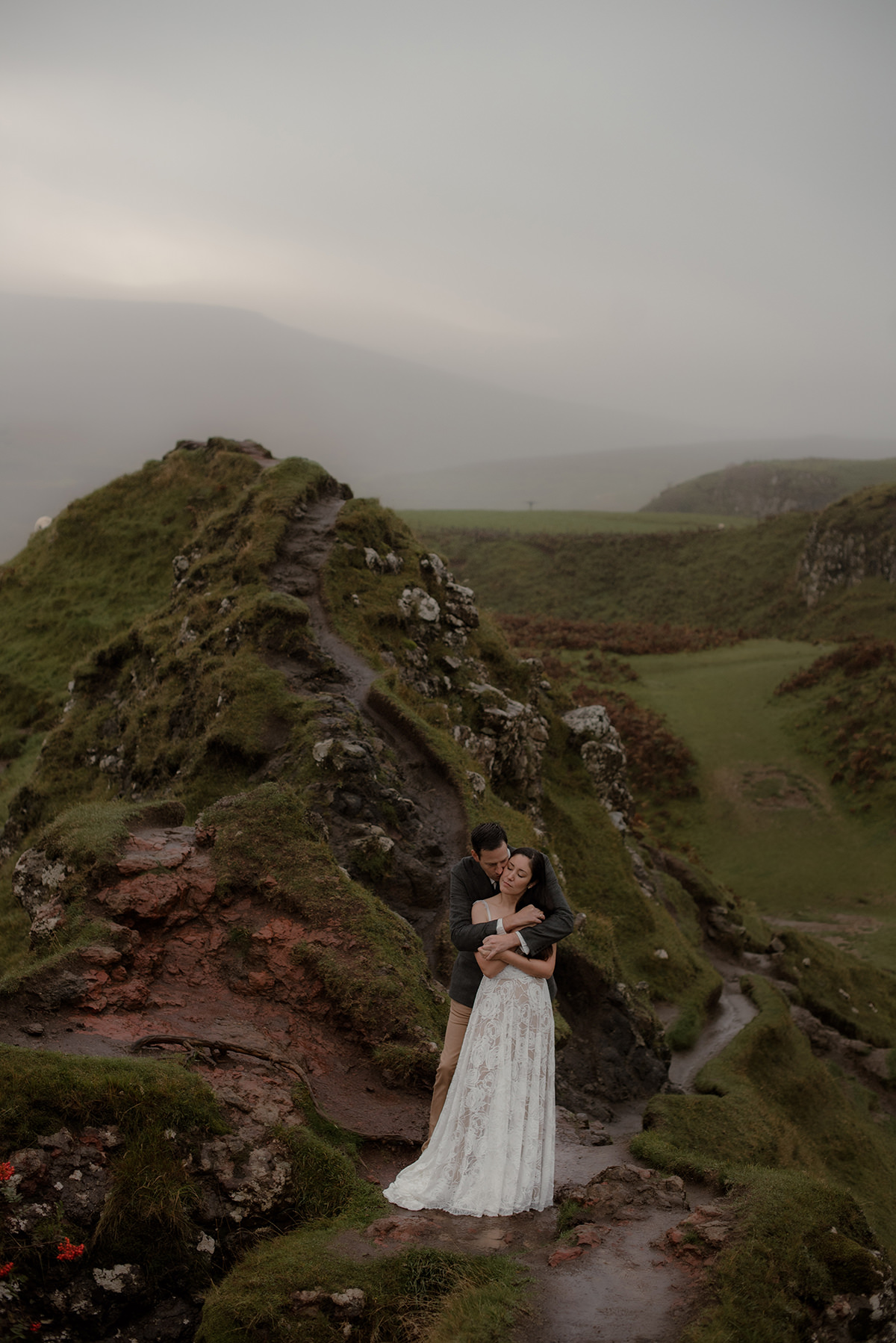

September and October are currently the busiest elopement months of the year in Scotland(!)
That means photographers book up far in advance and popular accommodation in places like Glencoe, Skye and the Cairngorms fills quickly. Some iconic locations can still feel lively, especially on weekends.
If you’ve found your dream photographer and you’re planning an October or November elopement, it’s best to enquire as early as possible.
Important: if you’re hoping for a completely private and peaceful “we’re the only people in this land” kind of experience in September or October, it’s important to set realistic expectations. Even on weekdays, it’s very likely we’ll bump into other newlywed couples at popular viewpoints.
That doesn’t make the experience any less magical – but it does mean autumn is no longer the hidden secret it once was.
If privacy is one of your top priorities, consider choosing November or the very beginning of September instead. Those windows often offer a noticeably calmer atmosphere while still giving you beautiful seasonal tones. Sunrise and sunset ceremonies or late November dates can offer a quieter experience as well! And couples often decide that stunning foliage and misty views are often worth the less of a private wedding experience.


Autumn weather can change quickly and forecasts aren’t always reliable. You might experience sunshine, mist and rain all in the same afternoon.
It requires flexibility and a willingness to embrace whatever the day brings. But often, those unpredictable conditions create the most atmospheric and memorable photographs.
Autumn in Scotland is dramatic, textured and deeply romantic.
It’s mist rolling through the glens, copper bracken under your boots, earlier golden light and cosy evenings by the fire – but without the winter chill.
Yes, it’s extremely popular now – and yes, it requires planning ahead. But if you’re drawn to atmosphere, depth and cinematic landscapes, autumn might just be your perfect season.
The truth is, there isn’t one perfect season.
It has moods. And it changes constantly.
The best time to elope in Scotland is the one that aligns with the experience you want to have – the atmosphere you’re drawn to, the pace you prefer, the feeling you want to remember. With thoughtful planning, flexibility and the right timing, every season here will bring you something extraordinary.
So whichever season you choose, it will be beautiful in its own, very Scottish way. And don’t forget about the most reliable weather websites in Scotland – MetOffice and XC-Weather. And remember that I’ll always have hand warmers and umbrellas to shelter you from the rain and cold on those chilly days.
And for inspiration see My Elopement Planning Guides here – maybe browsing through elopement images from different seasons will help you make the final decision?
If you’re still unsure, I’m always happy to help you choose the season that fits your vision best.
